It started with small things. A stack of unopened mail on your mom’s kitchen counter. A coffee cup set down just past the edge of the table. A Sunday dinner where she didn’t notice the peas on the left side of her plate. When you asked, she said she was fine. She just needed new glasses.
Many of the people who call us aren’t calling for themselves. They’re calling for a parent, a spouse, or a friend whose vision has been slipping. If you’re noticing changes in someone you love, here’s how to spot the signs, start the conversation, and help in ways that keep them independent.
Signs to Watch For
Vision loss often comes on slowly, and people adapt without realizing how much they’ve changed their routines. Some signs to look for:
- Unopened mail, missed bills, or notes they can’t read back
- Spills, missed food on one side of the plate, or trouble pouring
- Bumping into door frames or furniture, or near falls on steps and curbs
- Holding things very close, or turning on every light in the room
- Not recognizing people until they’re close or start talking
- Giving up reading, crafts, cards, or other hobbies they used to love
- Avoiding driving at night, or turning down trips they used to enjoy
Any one of these can have another cause, but a pattern is worth paying attention to.
How to Bring It Up
Talking about vision loss can feel like talking about losing independence, so it helps to lead with what your loved one wants to keep doing, not what they can’t do anymore.
- Start with their goals. “You’ve always loved your crossword. Would it help if the print were easier to see?” lands better than “Your eyes are getting worse.”
- Be specific and kind. Mention one or two things you’ve noticed, without keeping score.
- Offer to help with the logistics. Making the call, driving to the appointment, or sitting in on the visit takes a lot of the hesitation away.
- Let them decide. People are more open to help when it’s their choice.
Simple Changes at Home
- Add light where tasks happen. A bright, adjustable lamp over the reading chair, the stove, and the kitchen counter makes a big difference.
- Add contrast. Bright tape on the edge of steps, a dark cutting board for light foods, and a light-colored mug for dark coffee.
- Clear the walking paths. Move cords, loose rugs, and low furniture out of the way.
- Keep things in the same place. If you tidy up, put items back exactly where they were.
- Make the phone easier. Larger text, high contrast, and voice assistants can turn a frustrating phone into a helpful one.
Helping Without Taking Over
The goal is to make things easier, not to do everything for them. Ask before you help. When you’re walking together, offer your arm instead of steering them. Tell them where things are (“your glass is at two o’clock, by your right hand”) instead of handing everything over. Small choices like these protect their confidence as much as their safety.
When a Low Vision Visit Can Help
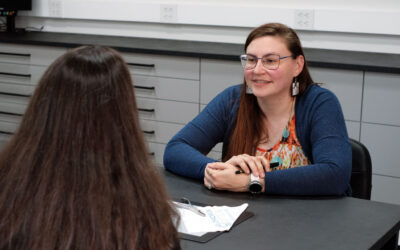
A low vision visit looks at what your loved one wants to get back to, then tests magnifiers, lenses, filters, and lighting on those exact tasks. Family members are always welcome, and many visits start with a son or daughter making the call. Having you there to hear the options and help with practice at home makes a real difference.
Read what to expect at a first low vision visit or learn what low vision is.
A Note on Sudden Changes
If your loved one’s vision changes suddenly, such as a new blind spot, a shadow over part of their vision, or sudden flashes or floaters, contact their eye doctor right away or go to the emergency room. Sudden vision changes can also be a sign of a stroke, so if they come with weakness, confusion, or trouble speaking, call 911.
Low Vision Optometry
Bring Us the Task That’s Gotten Harder
Reading the mail, seeing faces, watching TV, getting around. Our low vision optometrists will test magnifiers, telescopes, filters, and lighting on the things you want to do, then show you how to use what works.
Optometry appointments are required. A family member or friend is always welcome to come along.